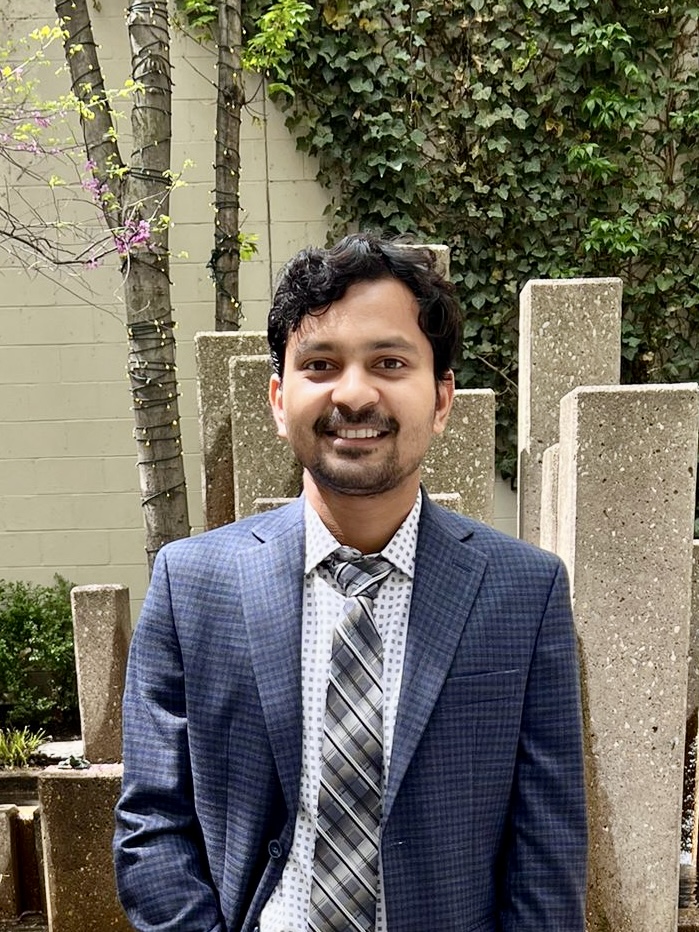
Leading the Creative Inquiry course on multi-robot off-road terrain navigation at Clemson, mentoring a team of six students.
Robotics · Machine learning · Human–robot interaction
Anshul Nayak
Postdoctoral Research Scholar
Clemson University
I develop safe, uncertainty-aware, and human-aligned autonomous systems. My research combines probabilistic inference, reinforcement learning, and multimodal reasoning to help robots make decisions around people and work together in uncertain environments.
I am a Postdoctoral Research Scholar at Clemson University. I received my Ph.D. in Mechanical Engineering from Virginia Tech in December 2024, advised by Azim Eskandarian. Previously, I worked at the Virginia Tech Transportation Institute and Honda Research Institute.
Recent updates
What’s new
Reason-Guided Human Reward Modeling accepted at the IFAC Workshop on Cyber-Physical Human Systems (CPHS).
Belief-Aware VLM Model for Human-Like Reasoning presented in the IEEE RO-MAN proceedings.
Joined Clemson University as a Postdoctoral Research Scholar.
Research directions
Research in focus
 Research visual
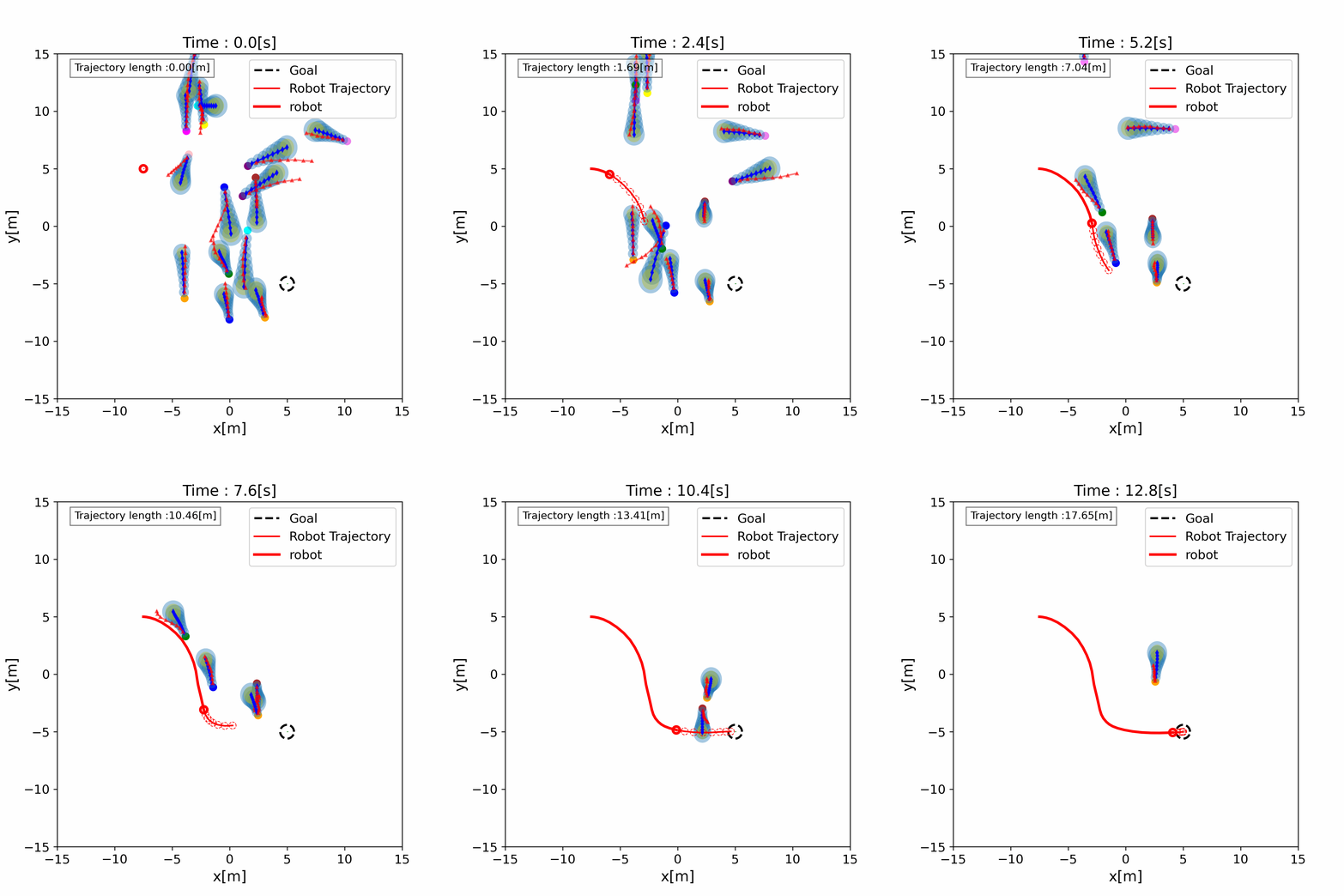
01 / Safe autonomy
Planning with uncertainty
Bringing uncertainty in perception and prediction into robot motion planning, with deep ensembles, model predictive control, and control barrier functions.
 Research visual
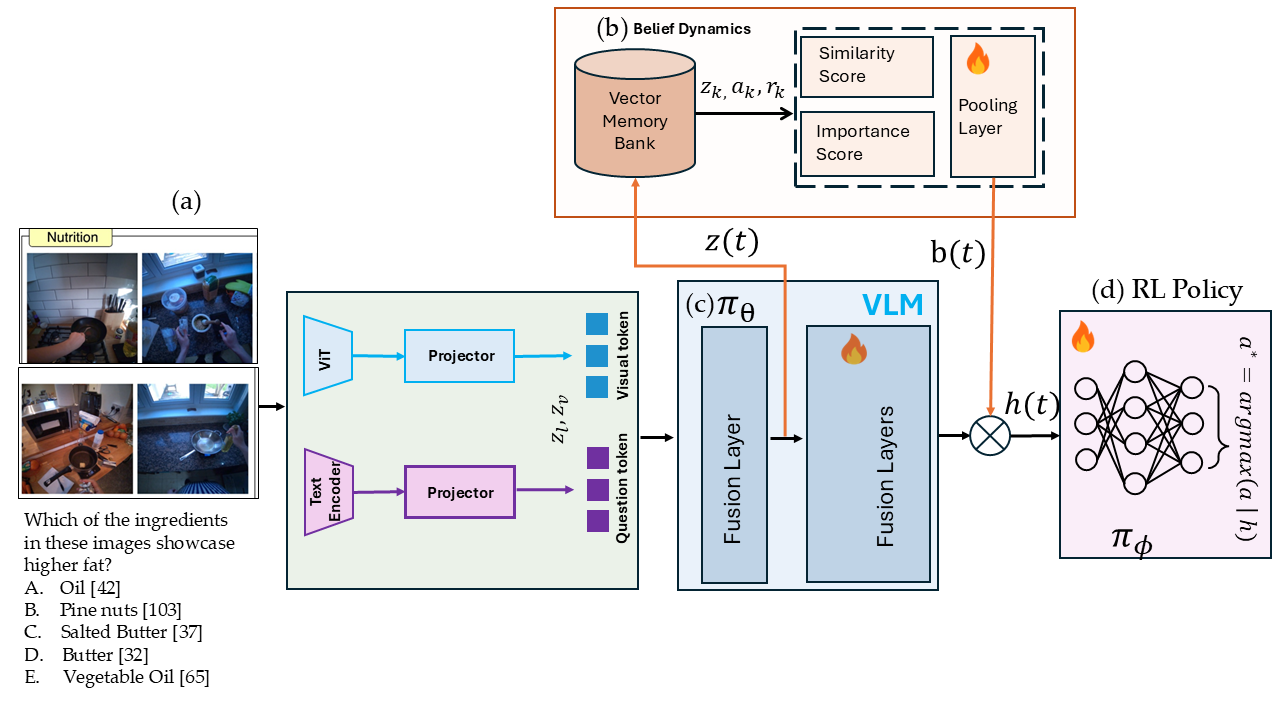
02 / Human–robot interaction
Belief-aware robot reasoning
Using retrieval-based multimodal memory to reason about intent in partially observable, long-horizon tasks and support human-like reasoning.
 Illustrative schematic
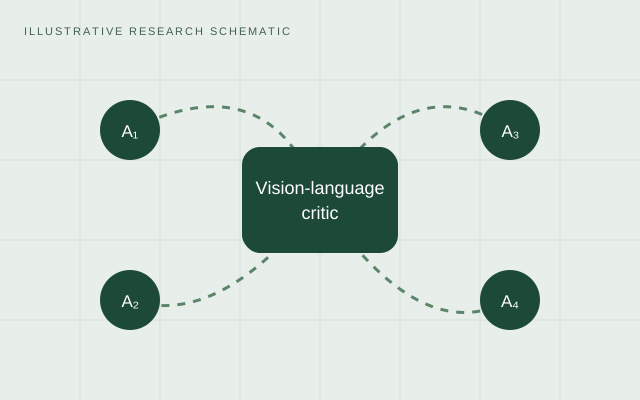
03 / Cooperative intelligence
Learning in multi-agent teams
Using a pretrained vision-language model as a critic for policy evaluation, with task descriptions, visual trajectories, and structured team state.
 Research visual
04 / Cooperative perception
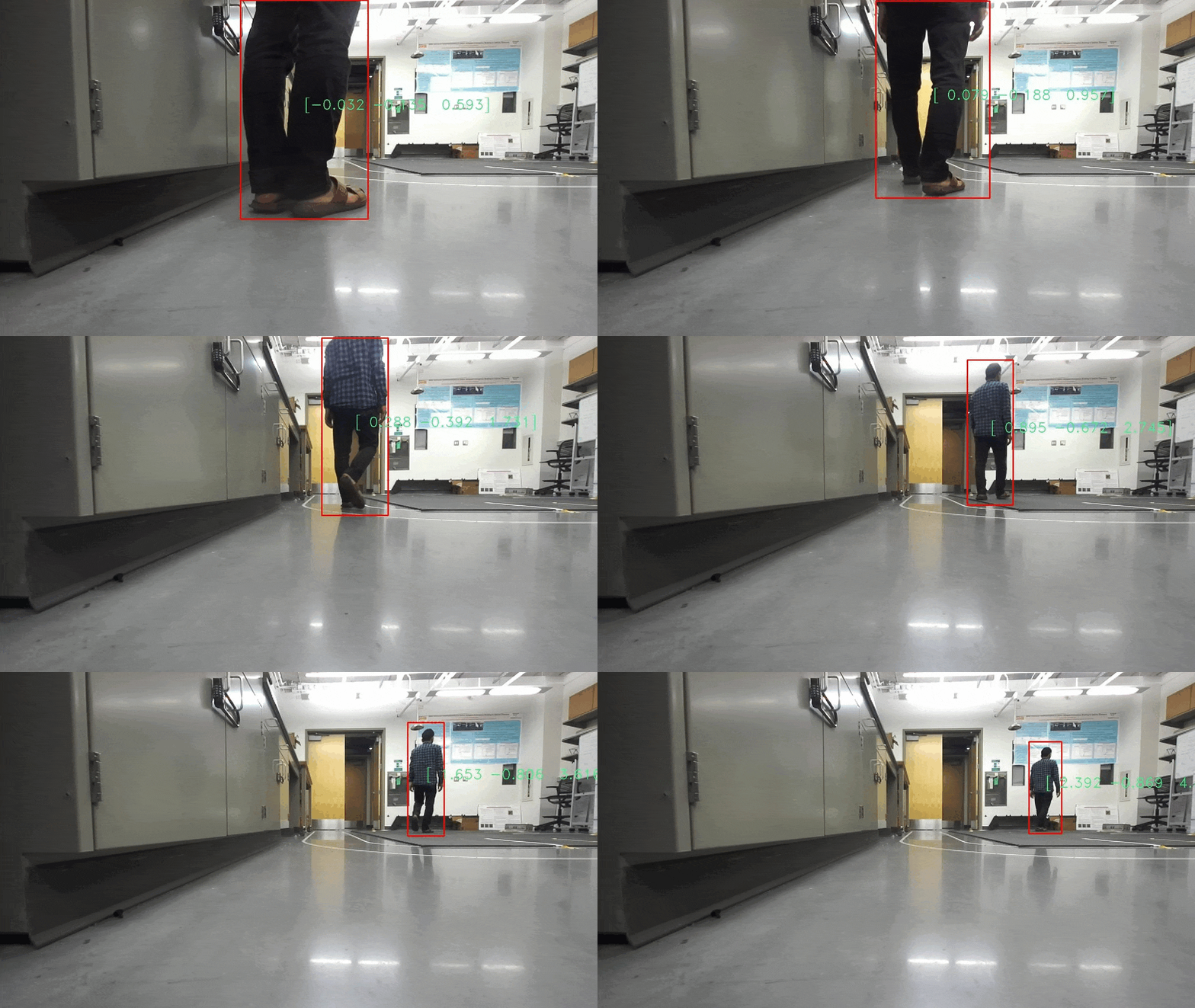
Seeing beyond occlusion
Cooperative trajectory forecasting that shares observations between connected agents to estimate and predict the motion of occluded pedestrians.
 Research visual
05 / Human motion
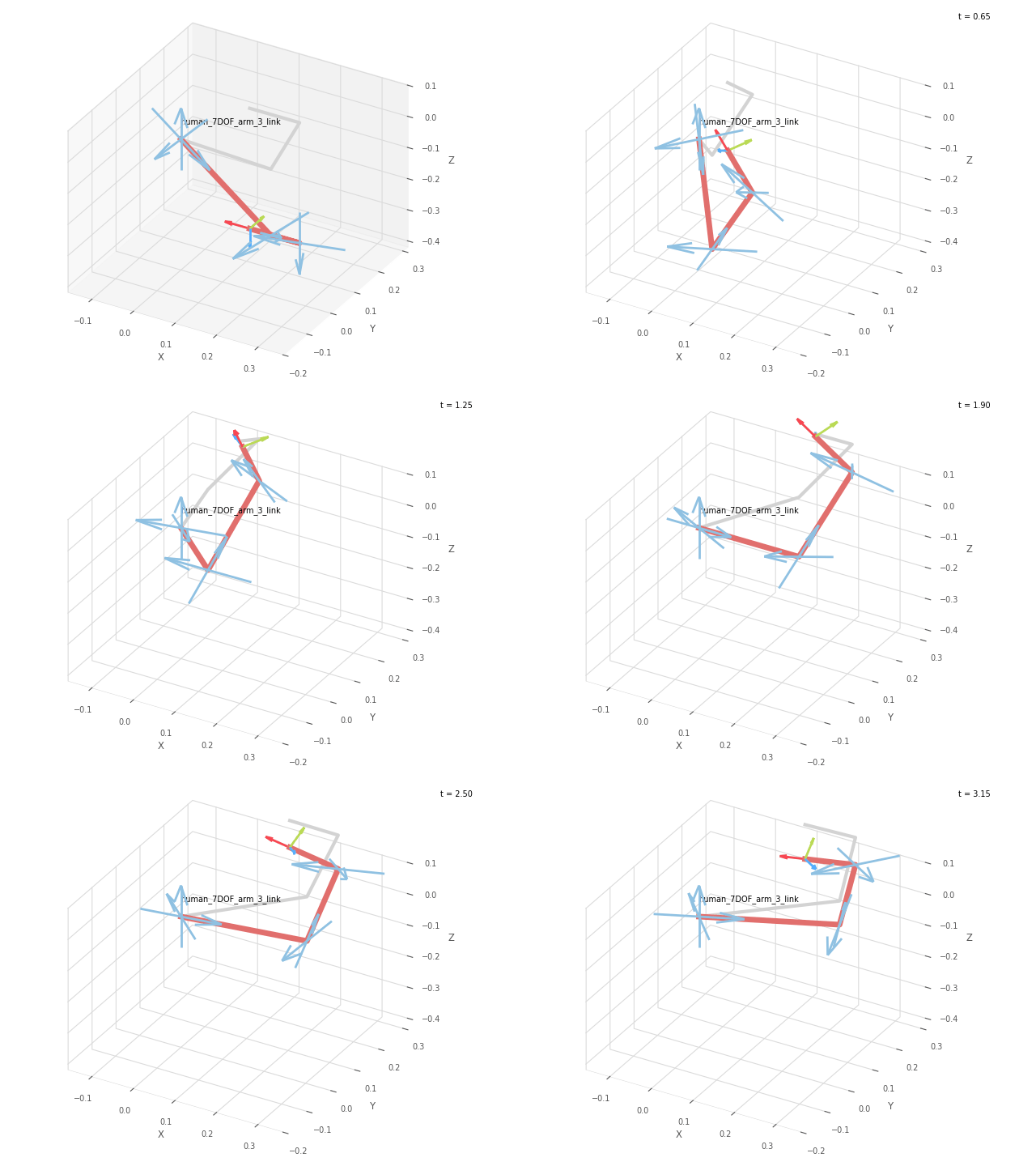
Human-like upper-limb motion
Model predictive control for a seven-degree-of-freedom arm model, generating smooth reaching and orientation motions and validating against human motion data.
 Illustrative schematic
06 / Social navigation
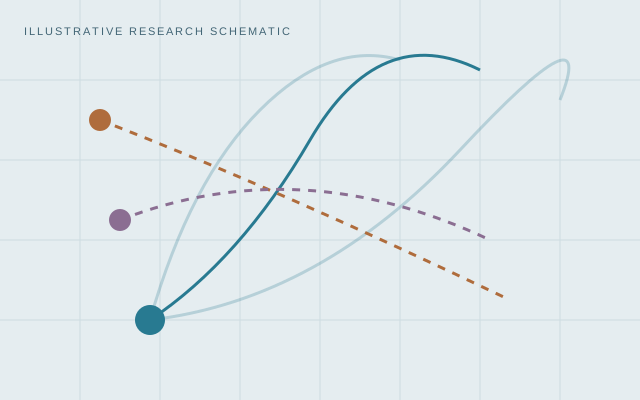
Learning pedestrian dynamics
Deep-Koopman predictive control for social navigation, bringing learned pedestrian motion into proactive collision avoidance.
Papers & preprints
Publications
2027
Koopman Predictive Control for Social Navigation with Learned Pedestrian Motion
American Control Conference (ACC) 2027
Under review2026
Reason-Guided Human Reward Modeling for Preference-Based Reinforcement Learning (PbRL)
IFAC Workshop on Cyber-Physical Human Systems (CPHS)
Accepted2026
Belief-Aware VLM Model for Human-Like Reasoning
IEEE RO-MAN · pp. 719–724
2026
MA-VLCM: A Vision Language Critic Model for Value Estimation of Policies in Multi-Agent Team Settings
arXiv:2603.15418
Preprint · under review at IEEE RA-L2025
Prediction Uncertainty-Aware Planning Using Deep Ensembles and Trajectory Optimisation
arXiv:2502.10585
Preprint2024
Pedestrian Trajectory Forecasting Using Deep Ensembles Under Sensing Uncertainty
IEEE Transactions on Intelligent Transportation Systems · 25(9):11317–11329
2024
Cooperative Probabilistic Trajectory Prediction Under Occlusion
IEEE Transactions on Intelligent Vehicles · 9(10):6258–6269
2023
X-CAR: An Experimental Vehicle Platform for Connected Autonomy Research
IEEE Intelligent Transportation Systems Magazine · 15(2):41–57
Published online in 2022; issue year 2023.
2022
Uncertainty Estimation of Pedestrian Future Trajectory Using Bayesian Approximation
IEEE Open Journal of Intelligent Transportation Systems · 3:617–630
2021
Motion Planning of Autonomous Vehicles Under Dynamic Traffic Environment in Intersections Using Probabilistic Rapidly Exploring Random Tree
SAE International Journal of Connected and Automated Vehicles · 4:383–399
2021
A Comparative Study on Feature Descriptors for Relative Pose Estimation in Connected Vehicles
ASME International Mechanical Engineering Congress and Exposition
2021
Relative Pose Estimation for Cooperative Vehicles and Tracking of Multiple Dynamic Objects
ASME International Mechanical Engineering Congress and Exposition
2021
Effect of Kinematics and Physical Properties of Caudal Fin on Performance of a Robotic Fish
APS March Meeting Abstracts · B14.011
2016
Modelling, Simulation and Experimental Investigation for Generating ‘I’ Shaped Contour on Inconel 825 Using Electro Chemical Machining
Journal of Manufacturing Processes · 23:269–277
Patents & book chapters
Patent application · 2025
Expected Human Trajectory Generation for Teleoperation ↗
S. Li, A. A. Nayak, and P. Baskaran
US Patent Application 19/083,337
Book chapter · 2024
Challenges and Algorithms for Connected and Autonomous Vehicle Safety and Mobility in Smart Cities
Azim Eskandarian, Goodarz Mehr, Anshul Nayak, and Xu Shang
Transportation Mobility in Smart Cities · pp. 239–262
Background & community
About & experience
I am a Postdoctoral Research Scholar at Clemson University. I received my Ph.D. in Mechanical Engineering from Virginia Tech in December 2024, advised by Azim Eskandarian. Previously, I worked at the Virginia Tech Transportation Institute and Honda Research Institute.
Experience
Clemson University
Postdoctoral Research Scholar
Virginia Tech Transportation Institute
Research Associate
Honda Research Institute
Research Intern
Virginia Tech
Graduate Research Associate
Education
Virginia Tech
Ph.D. in Mechanical Engineering
Virginia Tech
M.S. in Mechanical Engineering
NIT Rourkela
B.Tech. in Mechanical Engineering
Teaching & mentoring
At Clemson, I lead a Creative Inquiry course on multi-robot off-road terrain navigation, mentoring six students building an F1-TENTH vehicle and collecting multimodal data for vision-language models.
Previously, I taught fluid/thermal CAD and introductory physics labs at Virginia Tech.
Service & recognition
Session co-chair, “Cognition, Intent and Embodied AI III,” IEEE RO-MAN 2026. Reviewer for IEEE ITSC (2022, 2023) and IEEE IV (2022).
Pratt Fellowship, Virginia Tech Mechanical Engineering: 2018–2019 and Fall 2024.